Does NoFap Work? Separating Porn Use, Masturbation, and Daily Life

If porn regularly keeps you awake or takes time you meant to spend elsewhere, changing that pattern has a practical purpose. That is a more useful starting point for “Does NoFap work?” than expecting abstinence to improve every part of your life.
The term covers several practices. Stopping porn, reducing masturbation, and avoiding ejaculation are different goals. Being clear about yours makes it easier to assess what is helping.
Masturbation is not, by itself, a disorder
The International Society for Sexual Medicine describes masturbation as a normal sexual activity. Choosing not to masturbate is also a personal choice. Neither choice establishes whether a person has a compulsive pattern.
The relevant questions concern control and impact: do repeated attempts to change fail, and is the behavior disrupting responsibilities, relationships, or health? The ICD-11 discussion of compulsive sexual behaviour disorder distinguishes that pattern from a high sex drive and from distress based entirely on moral disapproval. A clinician can help assess persistent difficulties without treating every sexual thought as a symptom.
What the testosterone claim can tell us
The familiar “145.7% on day seven” figure came from a small study that was later retracted. It referred to a level relative to baseline, not a 145.7% increase. It does not support lasting benefits from semen retention. We explain the number and the retraction in NoFap and testosterone.
Replacing that claim with a promise that abstinence restores dopamine sensitivity on a fixed schedule would not solve the evidence problem. A person’s experience of improved focus cannot measure receptor recovery or establish its cause.
What an individual account can show
A QuitMate user wrote this at 153 days:
I used to miss the small movements at home. Quit porn, and you can actually see the family’s small interactions.
The writer felt more attentive at home. That matters as their experience. It does not show that family relationships improve for most people after 100 days or that porn was the only factor involved.
Useful observations may be quite ordinary: getting to bed when intended, spending less time viewing, or being more available for a conversation. Look for changes in the difficulty that led you to start. Our one-month review offers questions for doing that.
Choose support around the problem
If you repeatedly lose control of viewing, consider a clinician or therapist familiar with sexual health and compulsive behavior. If the main difficulty is guilt, anxiety, or conflict with personal values, say so; those concerns also deserve care. You do not have to prove addiction to ask for help.
Persistent erection difficulties and low mood or desire should be assessed separately. An abstinence counter cannot tell you their cause. You can keep a goal that fits your values while checking whether it is improving your daily life.
You may also like
NoFap Day 30: Reviewing a Month Without Porn
A month is enough to look at the habits you changed. Review sleep, time, urges, and remaining difficulties without treating day 30 as a medical milestone.
The NoFap Flatline: How Long It Lasts and When to Get Help
No libido, no morning erections, no motivation, feeling nothing at all. These experiences are often called the NoFap flatline. We look at what the term means, why there is no fixed recovery timeline, and when symptoms need medical attention.
Porn and Erectile Dysfunction: What the Evidence Can Tell You
Erection difficulties with a partner can have several causes. We examine research on pornography and ED, the limits of recovery stories, and what to discuss with a clinician.

The NoFap Timeline, Day by Day: What Actually Changes, and When
Day 7 testosterone spikes, day 14 superpowers, day 30 transformation. The timelines online read like a schedule nobody actually follows. Here's what people really report, week by week, including the walls and the flatline that the hype charts leave out.
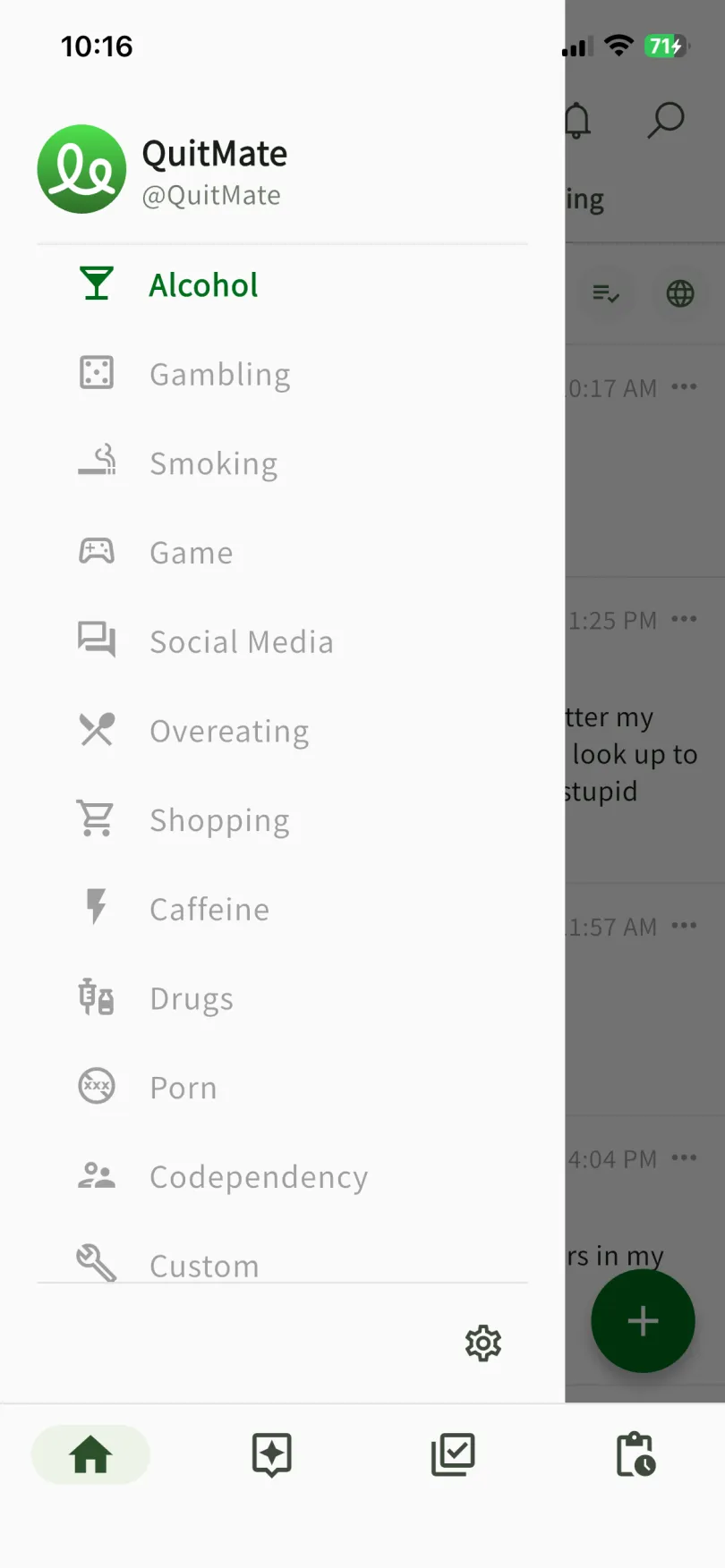
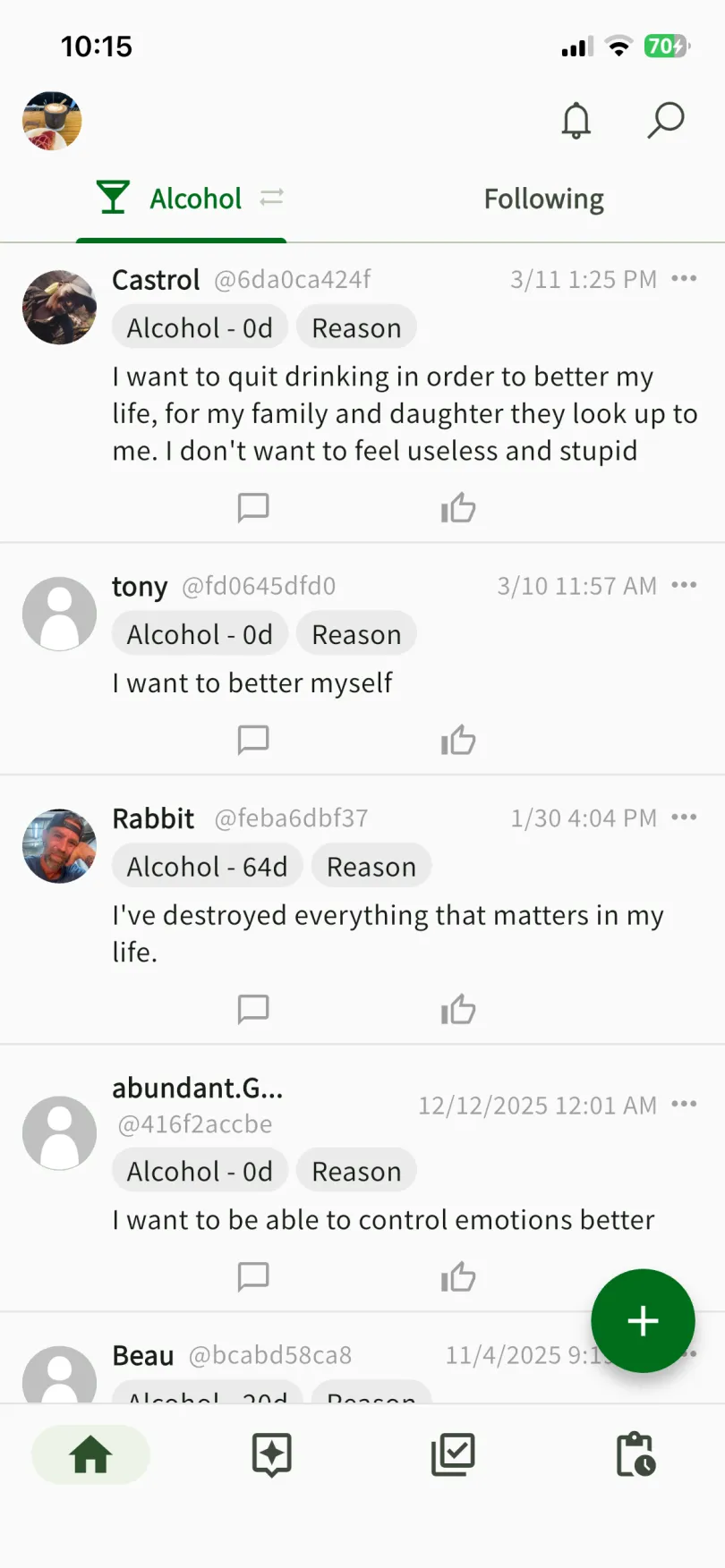

QuitMate
Together, you can quit
Connect anonymously with others who share your struggle. Whether it's alcohol, smoking, gambling, or other habits, you're not alone.