
Reflecting on an Addictive Behavior: Plan for the Next Time It Happens

“I will try harder next time” leaves a lot to decide when the difficult moment returns. A more usable note names the situation and an action: if I open the betting app after work, I will close it and call the person I have agreed to contact.
Reflection can help you build that note. It does not require a polished journal entry or a judgment about what kind of person you are.
Start with one recent occasion
Choose a particular evening rather than writing “I always do this.” Where were you? What happened just before? What options were available? Include practical details such as a saved payment method, an empty evening, or a route past a familiar venue.
If the record becomes an argument with yourself, return to what could have been observed. “I opened the app after reading an advert” gives you something to change. “I am hopeless” does not specify the next action.
Turn the situation into an if–then plan
Researchers call these specific links between a situation and an intended response implementation intentions. A 2006 meta-analysis by Gollwitzer and Sheeran examined their effects across goal-pursuit settings. It supports planning a response, but does not show that a few seconds of reflection alone prevents addiction relapse.
These are illustrative plans:
| Situation | Intended response |
|---|---|
| A gambling promotion arrives | Delete it, unsubscribe, and check the account’s marketing settings |
| A cancelled plan leaves the evening open | Contact an agreed person or start a prepared alternative |
| I want to change a blocker setting | Speak to my support person before making the change |
Choose an action you can actually carry out. If it depends on another person, agree with them first and have an option for when they are unavailable.
Read the plan when it will be useful
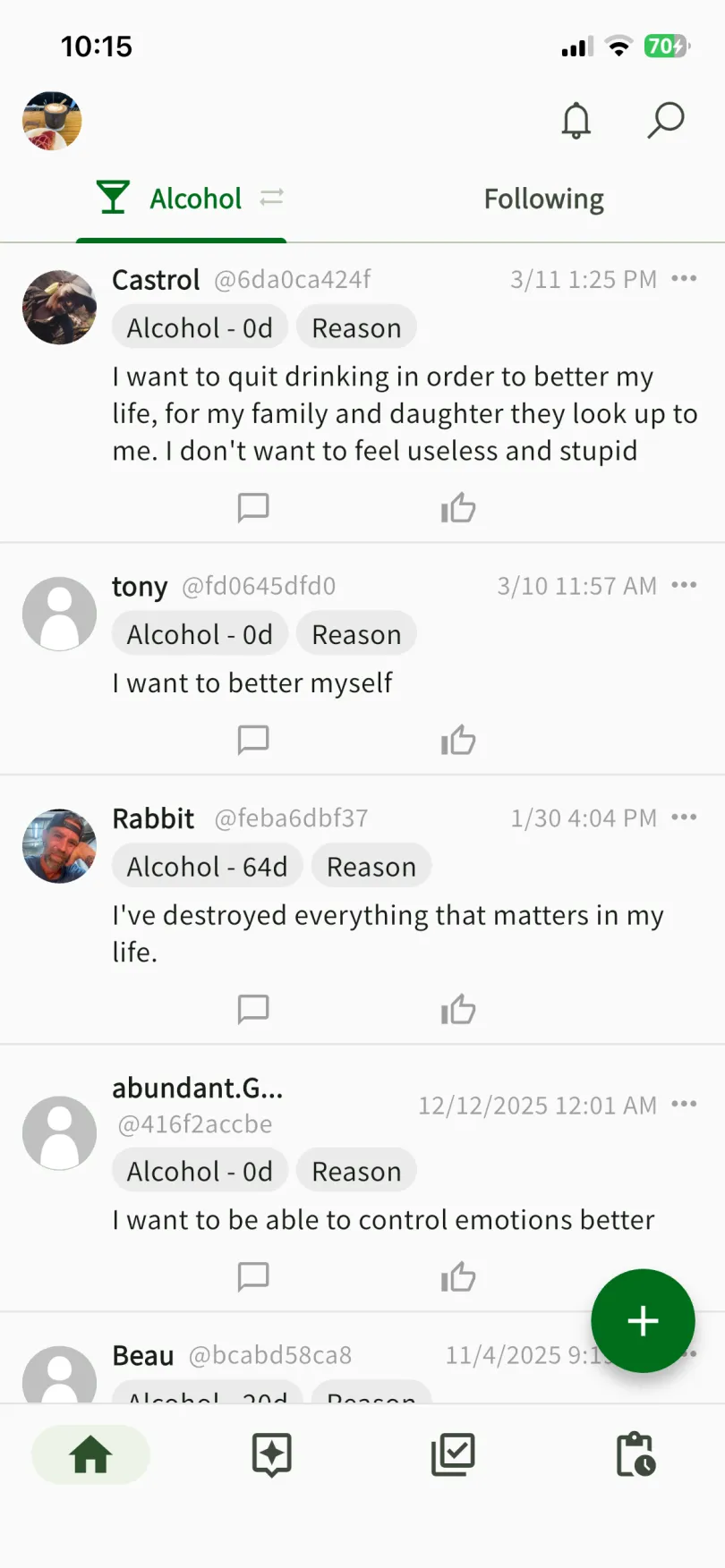
Put the note somewhere you will encounter it before the situation, such as a reminder before payday or a notebook you check after work. A private note is enough. If you use QuitMate to reflect, share only what you are comfortable making visible to others.
A counter or another person’s story can prompt you to review a plan, but reading it does not establish that a behavior has changed. Look at what happened when the situation actually occurred.
Revise what did not work
Did you notice the situation? Was the action available? Was the barrier too easy to bypass? Those questions can lead to a different response or more support. Reviewing behavior without self-blame covers the before-and-after record in more detail.
If the behavior keeps causing harm, use professional support alongside the plan. Reflection is one tool for deciding what to try next, not a requirement to solve the problem alone.
You may also like

Recovery Can Mean Choosing a Different Life, Not Recreating the Past
Wanting an old life back can sit alongside fear of repeating a harmful pattern. One person's change of plan shows how recovery can involve new choices and support.
Online Recovery Communities and Treatment: How to Use Both
A community can offer a place to write between appointments. Learn how that differs from clinical care, what digital-support research covers, and how to plan for times when no one replies.

Early Comments and Longer Streaks: What 599 QuitMate Records Show
In a selected group of 599 users, early comments written on others’ posts were associated with longer maximum streaks. The figures, selection criteria, and limits of the comparison.
After a Lapse: Reviewing What Happened Without Attacking Yourself
An ABC record separates the situation, the behavior, and its consequences. Use a concrete example to identify what needs repair and what you could prepare differently next time.

QuitMate
Together, you can quit
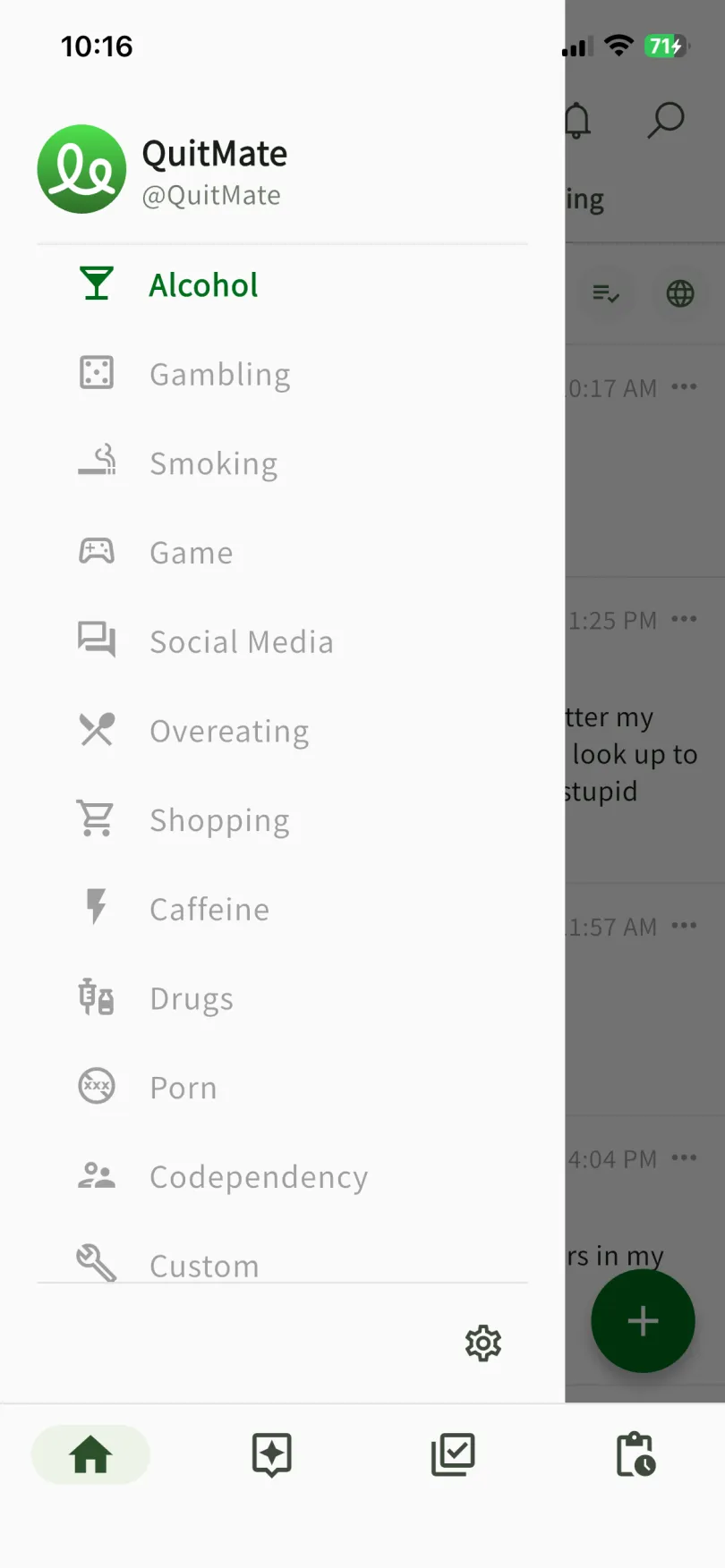
Connect anonymously with others who share your struggle. Whether it's alcohol, smoking, gambling, or other habits, you're not alone.