
Helping a Family Member With Addiction: Money, Responsibilities, and Boundaries

Someone asks you to pay another debt or make an excuse for a missed shift. You want to help, but taking over has become a pattern. “Stop enabling” may name the concern without telling you what a workable change looks like.
Start with the particular responsibility. What are you being asked to do, what would it cost you, and who else would be affected? The same response will not fit every household.
Separate practical help from taking over
“Enabling” is often used for help that unintentionally makes a harmful pattern easier to continue. It should not become a label for every act of care or a claim that the family caused the addiction.
The following are examples to consider, not instructions for every situation:
| Request or situation | A possible boundary and offer |
|---|---|
| Another gambling debt | Decline a new loan while offering help finding debt advice |
| A missed work shift | Decline to invent an excuse; the person handles the conversation when able |
| Wants help getting treatment | Offer to find a service or accompany them if you can |
| Harm or threats at home | Get safety support rather than treating the danger as a lesson |
Shared debts, tenancy, caregiving, and children can complicate a decision. Get relevant professional advice before changes that affect those responsibilities. There is no need to share bank credentials or make yourself the only safeguard.
A consequence is not a treatment plan
You can stop taking on responsibilities you cannot carry. That does not require engineering a crisis or waiting until someone “hits bottom.” Food, housing, and urgent medical care should not be withheld to force insight.
If you fear a person’s response, do not test a new boundary alone in an unsafe situation. Violence, threats, overdose, or severe withdrawal require the appropriate emergency or specialist response. Physical distance may be necessary to protect you and others.
What a family program can offer
CRAFT helps concerned people examine situations, communicate, prepare treatment invitations, and care for their own lives. A 1999 alcohol trial found higher treatment entry in its CRAFT condition than in two comparison approaches. It did not establish a guaranteed recovery rate or make the family responsible for the outcome.
Support can help you decide what is feasible. You do not have to supply affection you do not feel, or stay in a harmful relationship to prove commitment to recovery.
Say what you can actually do
An illustrative response might be: “I can’t lend more money. I can help find an adviser tomorrow.” Keep the commitment within your capacity and choose a time when discussion is safe. You can revise it if circumstances change.
Your own sleep, finances, relationships, and care belong in the plan. If you need support around gambling in the US, the National Council on Problem Gambling can connect you with resources. Elsewhere, look for a local family or addiction service. You can ask for help even if your relative is not ready to.
You may also like

Motivational Interviewing for Families: Conversations About Addiction
Examples of open questions, listening, and boundaries when a family member has an alcohol or gambling problem, with the limits of what a conversation can do.

CRAFT for Families: What You Learn and What the Research Shows
CRAFT helps family members consider communication, daily situations, treatment invitations, and their own wellbeing. Learn what a treatment-entry result means and what it does not guarantee.

NoFap Day 30: Reviewing a Month Without Porn
A month is enough to look at the habits you changed. Review sleep, time, urges, and remaining difficulties without treating day 30 as a medical milestone.
The NoFap Flatline: How Long It Lasts and When to Get Help
No libido, no morning erections, no motivation, feeling nothing at all. These experiences are often called the NoFap flatline. We look at what the term means, why there is no fixed recovery timeline, and when symptoms need medical attention.

QuitMate
Together, you can quit
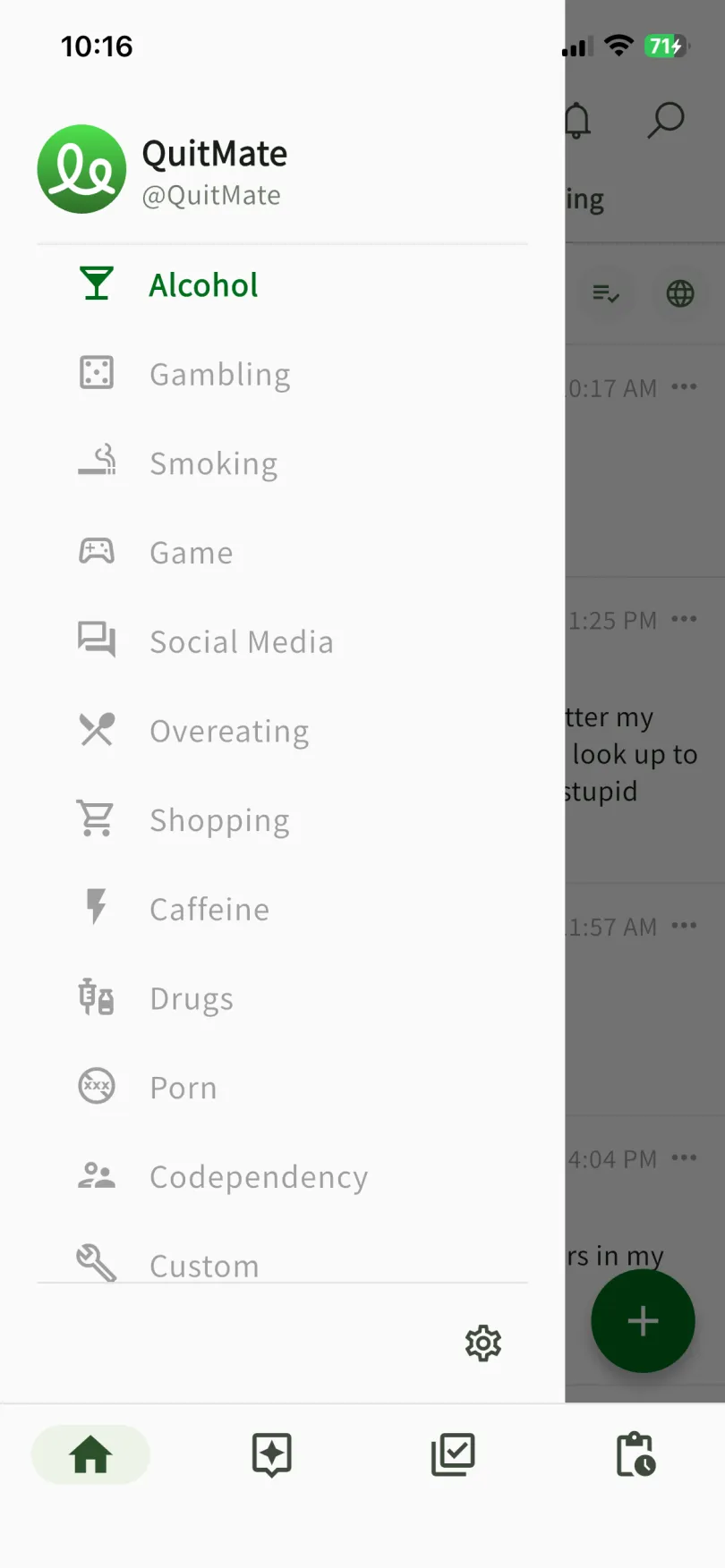
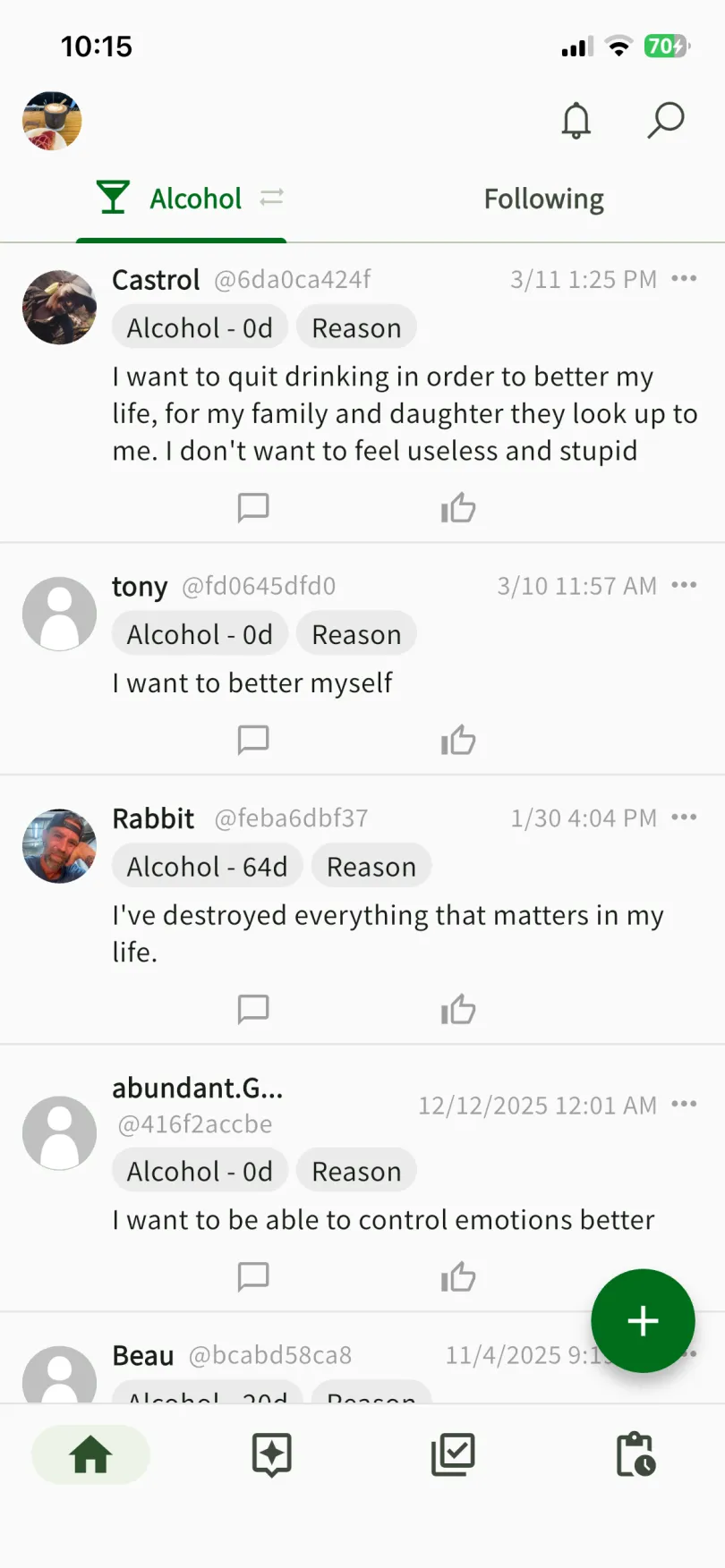
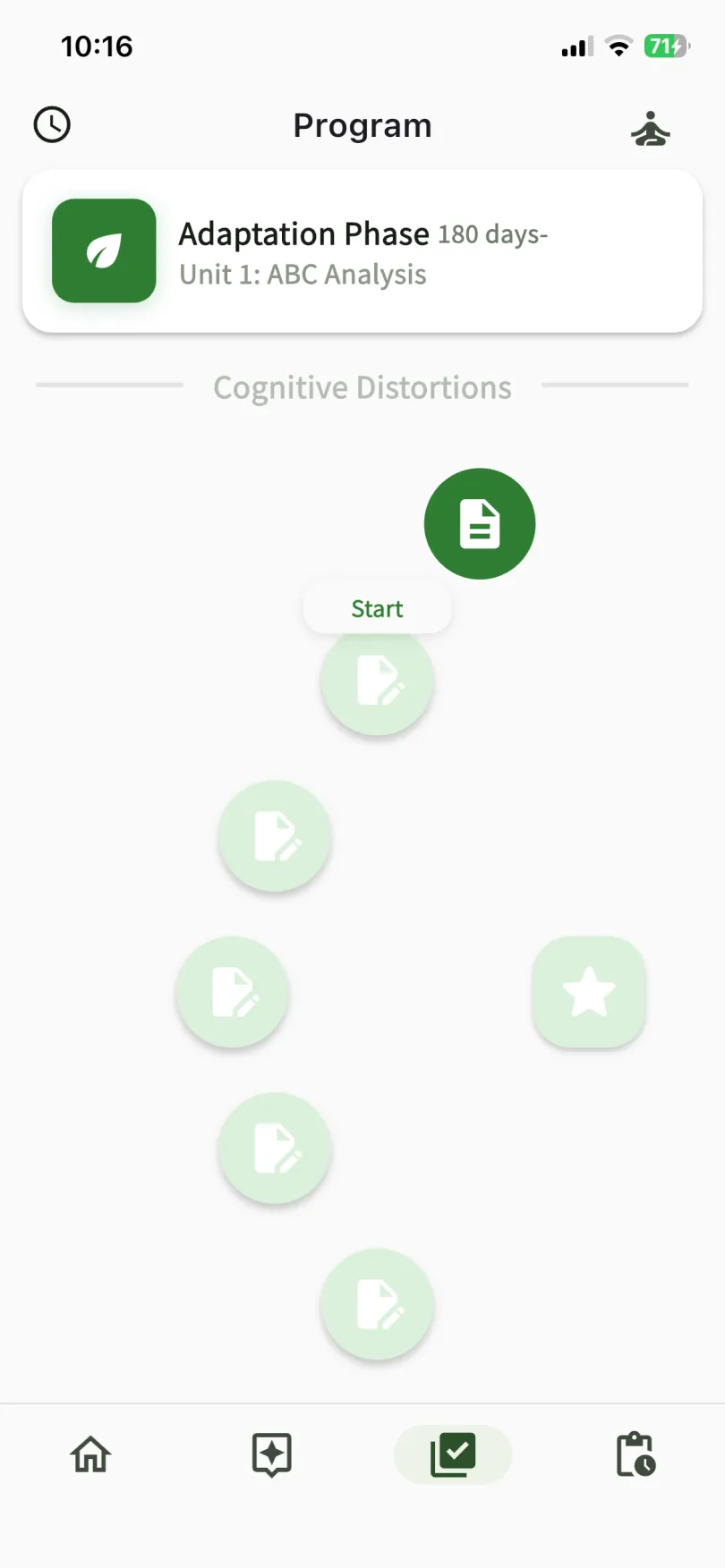
Connect anonymously with others who share your struggle. Whether it's alcohol, smoking, gambling, or other habits, you're not alone.