
Motivational Interviewing for Families: Conversations About Addiction

You finally get a quiet moment to talk about the drinking or gambling. You have a list of things that need to change. They have a list of reasons you do not understand. Within minutes, you are having the same argument again.
Motivational interviewing offers some useful ways to slow that conversation down. It is a professional counseling approach that explores a person’s mixed feelings about change. A family can borrow listening skills from it without taking on the job of being the person’s therapist. SAMHSA describes the approach and its core skills here.
Four skills to try in an ordinary conversation
The acronym OARS stands for open questions, affirmations, reflective listening, and summaries. The following examples are written for this article; they are not a script you have to get right.
| Skill | An example | What to pay attention to |
|---|---|---|
| Open question | “What has been hardest about trying to stop?” | Ask one question, then leave room for an answer. |
| Affirmation | “You called the counselor even though you were nervous.” | Name an effort you actually saw. |
| Reflective listening | “You want to stop, and you are worried you will fail again.” | Check your understanding instead of guessing at hidden motives. |
| Summary | “You want less debt and more time at home. Have I understood that?” | Let them correct you. |
There is no need to use all four in one sitting. If the person says they are exhausted, listening for a few minutes may be enough. Questions can still feel like an interrogation when they come one after another.
When they mention wanting to change
Suppose they say, “I miss spending Saturdays with the kids.” You could ask what they would like the next Saturday to look like. If they suggest calling a support service, ask whether they want help finding the number or would rather do it themselves.
Avoid turning a tentative thought into an immediate test: “Then prove it.” Equally, you do not have to treat a promise as a completed action. It is reasonable to return to practical arrangements about bills, childcare, or an appointment.
Listening can include a firm boundary
You can acknowledge stress and still say, “I cannot lend you money for another bet.” You can hear how difficult stopping feels and still protect money needed for rent. Family boundaries and enabling covers examples of this distinction.
Choose a time when both of you can take part safely. If there is violence, intimidation, or an immediate risk of harm, get to safety and seek emergency help; a conversation technique is not the next task.
You may also be too worn out to have this discussion today. Support for you can begin before your family member agrees to treatment. CRAFT is one structured option to discuss with a qualified service. The success of their recovery does not rest on your finding perfect words.
You may also like

CRAFT for Families: What You Learn and What the Research Shows
CRAFT helps family members consider communication, daily situations, treatment invitations, and their own wellbeing. Learn what a treatment-entry result means and what it does not guarantee.
Helping a Family Member With Addiction: Money, Responsibilities, and Boundaries
“Stop enabling” does not tell you what to do about a debt, a missed shift, or safety. Work through specific choices while protecting your own needs and access to support.

NoFap Day 30: Reviewing a Month Without Porn
A month is enough to look at the habits you changed. Review sleep, time, urges, and remaining difficulties without treating day 30 as a medical milestone.
The NoFap Flatline: How Long It Lasts and When to Get Help
No libido, no morning erections, no motivation, feeling nothing at all. These experiences are often called the NoFap flatline. We look at what the term means, why there is no fixed recovery timeline, and when symptoms need medical attention.
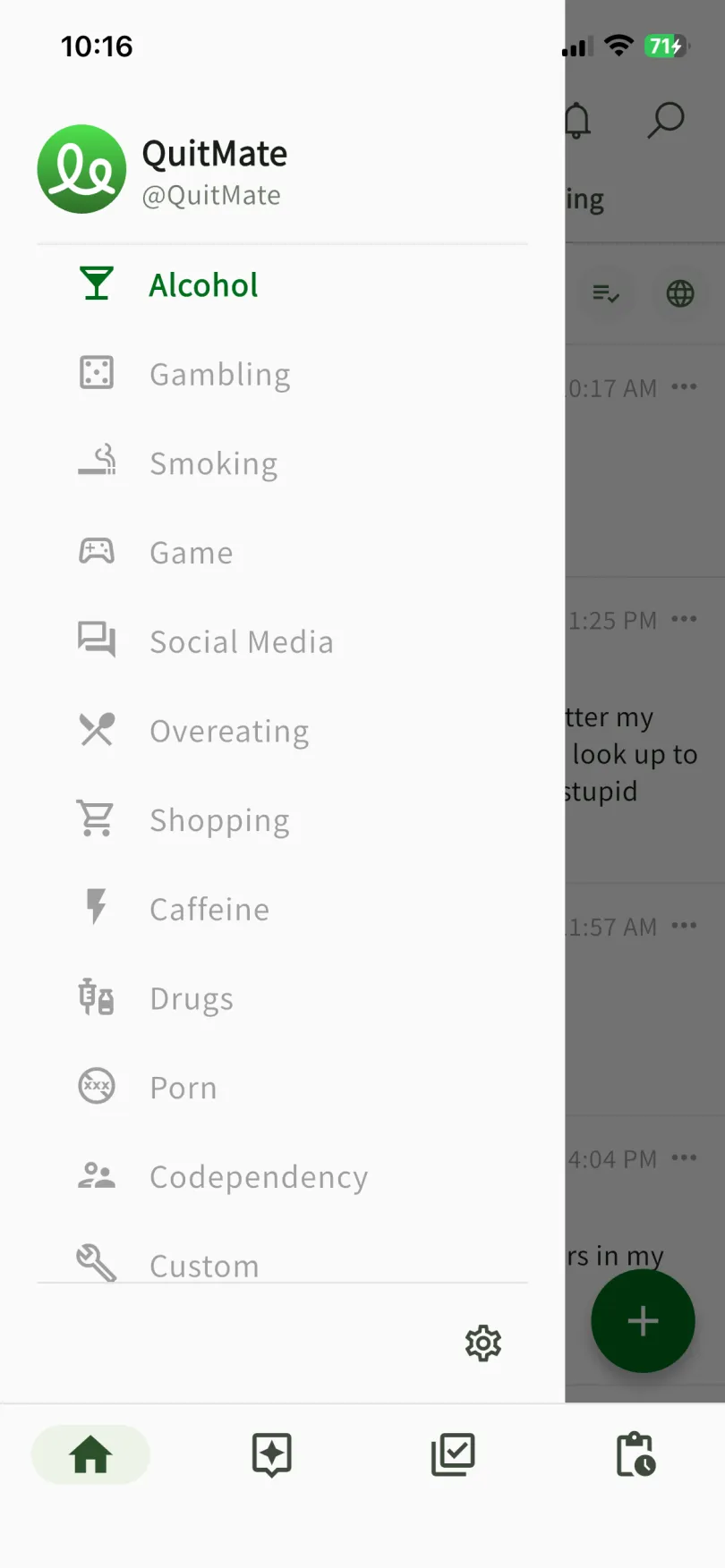
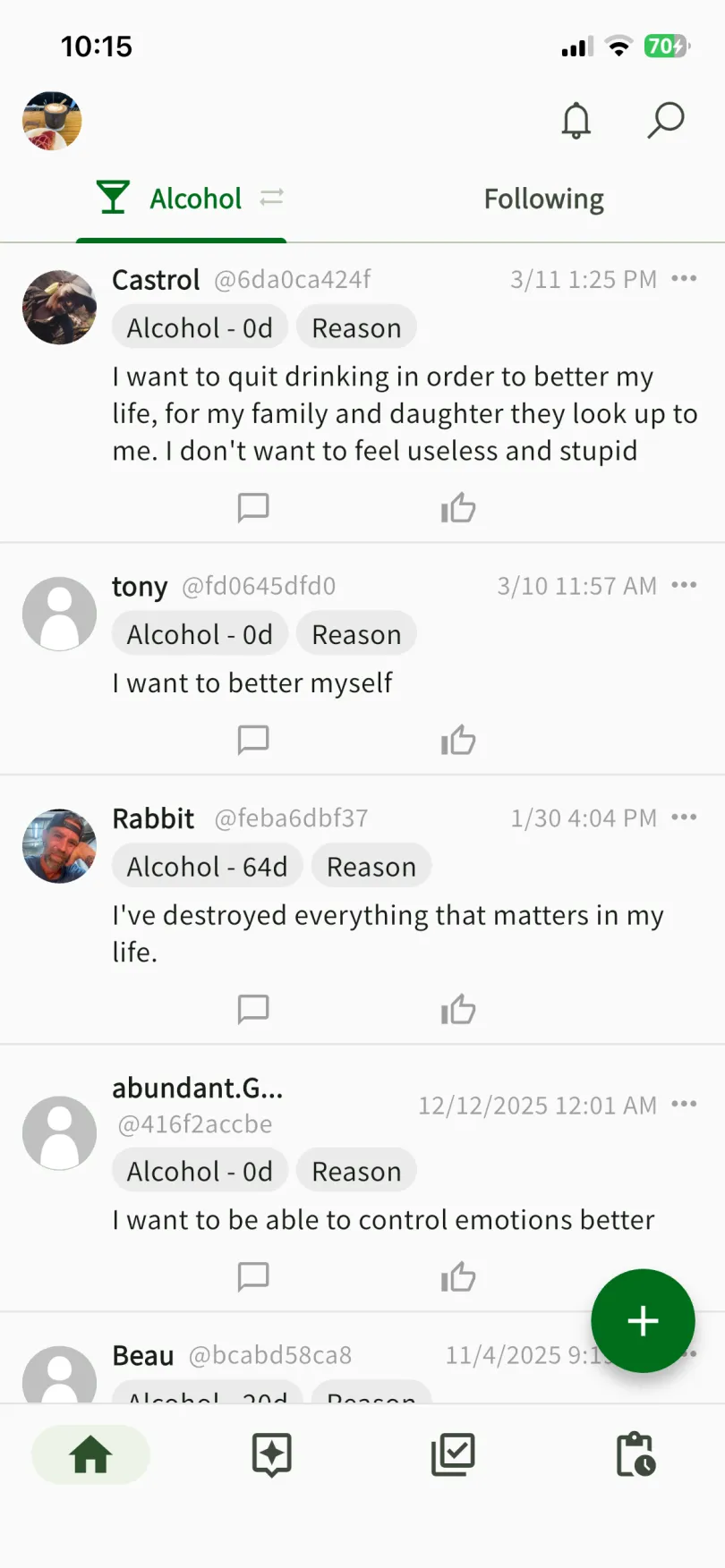

QuitMate
Together, you can quit
Connect anonymously with others who share your struggle. Whether it's alcohol, smoking, gambling, or other habits, you're not alone.